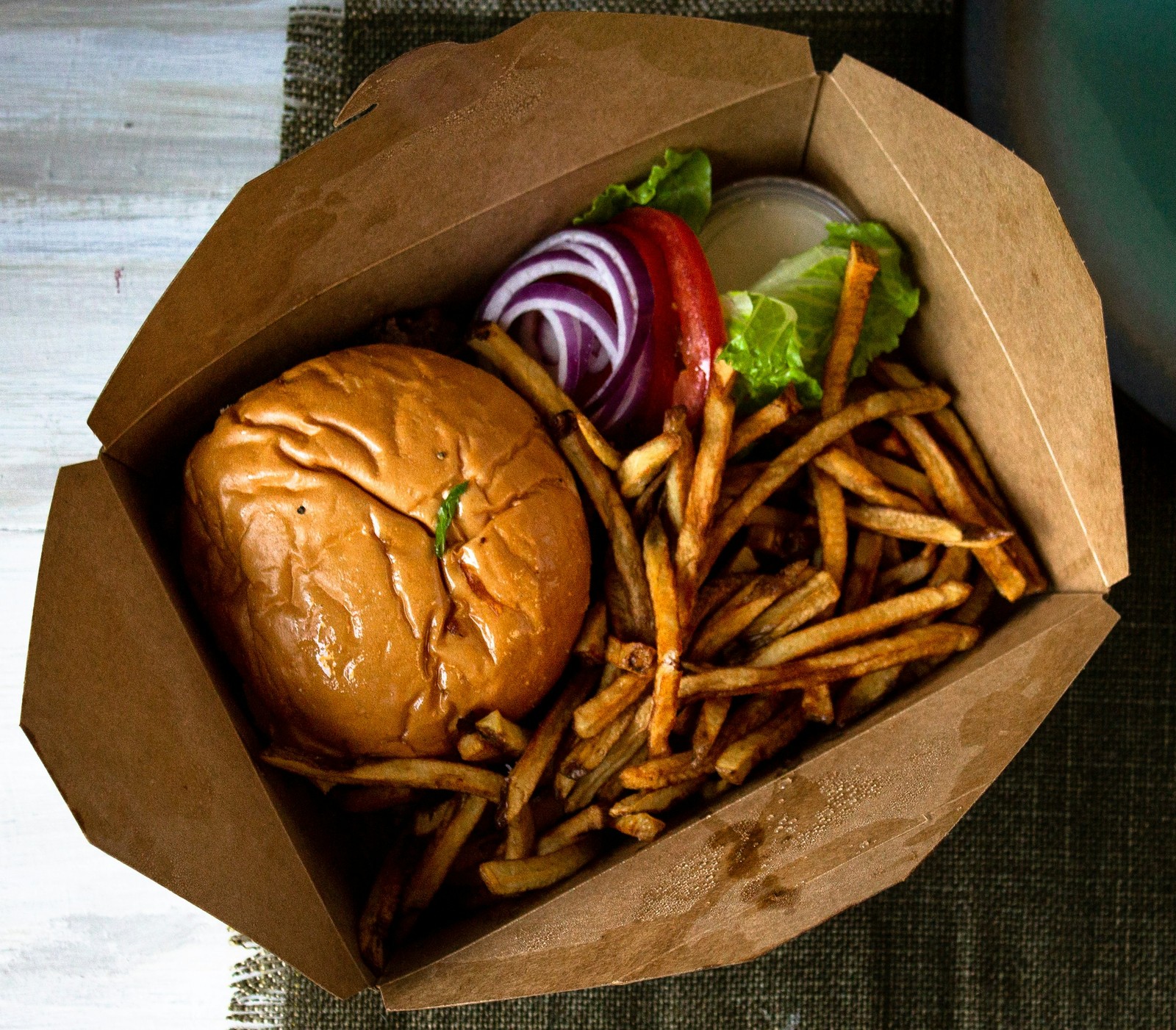
Welcome back to Money Mindset Wednesday. Today's topic is marginal utility, and why the third takeout order hits differently for us college students specifically.
Tuesday's order vs. Thursday's order
Let's say on Tuesday you place an order for takeout, the first time this week. Great, amazing, everyone deserves a little special treat. But by Thursday, you've ordered takeout for the third time this week, which is, well, not the best.
Same food, same price, sometimes even the same restaurant. What changed wasn't the meal. It was you.
What marginal utility actually means
This is what economists call marginal utility: the idea that each additional unit of something gives you less satisfaction than the one before it, even though you're paying the exact same price every time.
According to a straightforward example laid out by Economics Help, imagine eating pieces of chocolate cake. The first piece might give you 120 units of satisfaction. The second, maybe 100. By the fourth piece, your total satisfaction peaks, and the fifth piece adds nothing at all, you're indifferent between stopping at four or eating a fifth. Push it to a sixth, and satisfaction actually turns negative, you start to feel sick.
That's the law of diminishing marginal utility: the more of something you consume, the less additional pleasure each extra unit provides. Tuesday's order was the first piece of cake. Thursday's is somewhere around the fifth, still costing the same, delivering a lot less.
Try it yourself
Same $15 order, every single time. Click through a week of takeout and watch what happens to the satisfaction, not the cost.
The cost stayed identical. The value didn't.
The first takeout order on Tuesday felt like a treat. By the third, it's not a treat anymore, it's just Thursday. The cost stayed identical. The value you got from it didn't.
Research summarized by Etonomics points to two specific reasons this happens anyway, even though we can usually feel it in the moment if we're honest. The first is projection bias, projecting your current state onto the future. If you're hungry or stressed right now, you assume you'll still feel that way later, so you overbuy, a bigger order, more food than you'll actually want by the time it arrives. The second is present bias, simply consuming more right now than diminishing returns would justify. Order two already delivered less satisfaction than order one, but in the moment, that math doesn't feel real. You order it anyway, and only notice afterward that it didn't hit the same.
Delivery apps and promotions make this worse, not better. Free delivery thresholds, limited-time offers, and flashy in-app deals are specifically designed to inflate your anticipated satisfaction beyond what you'll realistically experience, nudging you toward an order your own diminishing returns would otherwise talk you out of.
A different way economists explain the same thing
Not every economist explains this the same way, and the disagreement is genuinely useful to understand. The mainstream approach, like the cake example above, treats utility as something quantifiable, satisfaction points adding up to a "total utility."
The Austrian School, associated with economists like Carl Menger, rejects that framing entirely. In an explainer published by the Mises Institute, the example given is a baker with four loaves of bread. He ranks his goals: loaf one feeds himself, loaf two gets traded for tomatoes, loaf three gets traded for a shirt, and loaf four goes to feeding birds, his least important use. In this view, there's no running "total satisfaction" score at all. Applied to takeout: order three isn't delivering fewer abstract satisfaction points, it's serving a lower-priority want than order one did, convenience over genuine craving, and your own ranking of what you actually needed shifted the moment the first two were already satisfied.
Either explanation lands on the same practical point: repeating the same purchase rarely delivers repeating value.
Why spreading it out actually pays off
This is why spending on the same thing repeatedly rarely feels as good as spending mattered the first time, and why spreading purchases out, or diversifying what you spend on, actually gets you more satisfaction per dollar. A week with one takeout order, one coffee shop study session, and one evening out with friends will almost always deliver more total value than three takeout orders, purely because each one is still hitting a fresh want instead of a diminishing one.
What to actually do with this
- Notice the shift before you order, not after. If Thursday's order is scratching a lower-priority itch than Tuesday's did, that's worth acknowledging honestly before paying full price for it again.
- Spread spending across different sources of satisfaction, rather than repeating the same one. A varied set of smaller purchases tends to deliver more total value than repeating one purchase past the point of real enjoyment.
- Be skeptical of app promotions timed right when your interest is already dropping. A discount that lands exactly when you're least excited about a third order is doing exactly what it's designed to do.
The thread that connects it all
The third takeout order isn't a failure of willpower. It's diminishing returns doing exactly what economic theory predicts.
Whether you frame it as fading satisfaction points or a shift in what you're actually prioritizing, the pattern is the same. Recognizing it doesn't mean never ordering again. It means noticing when Thursday's order has quietly stopped being about the thing Tuesday's actually was.
Welcome, truly, to the long game.
Sources & further reading
- "The Psychology of Marginal Utility" - Etonomics
- Pettinger, T. "Marginal Utility Theory" - Economics Help
- Shostak, F. (2025). "Marginal Utility Theory Versus the Mainstream" - Mises Institute