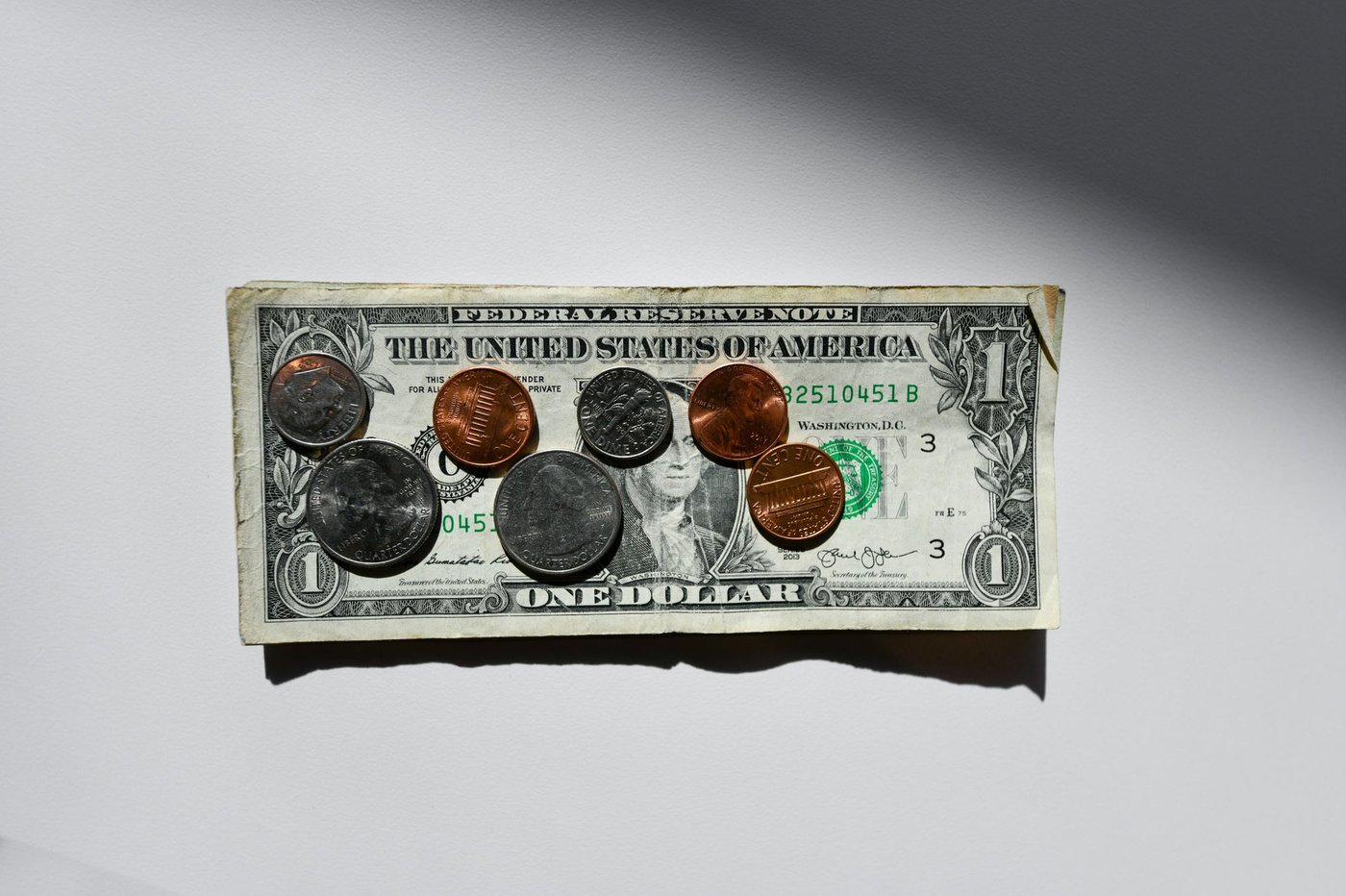
Welcome back! Today's topic will be addressing the money sitting in the wrong bank account.
When we turn 18, most of us just open a normal checking account, and it's normally the bank that your parents use too. Then, without ever questioning it, that bank becomes the only place where all your money goes - your paychecks, savings, any birthday money that your grandparents might send. We don't question it because it's familiar and convenient, and for any spending that you do, it's the perfect tool.
The actual problem is what happens with the money that you are saving up and not potentially spending in the next 30-40 years. If it just sits in a normal checking account, it earns little to nothing.
What Checking Accounts Are Actually For
Checking accounts are specifically designed for movement - money moving in and out constantly. They are not designed for you to grow your balance, and the banks don't pretend that the accounts do. Several of the nation's largest banks pay as little as 0.01% APY on checking and basic standard balances. So if you were to put $1,000 into a basic checking account and you check it a year later, you would only get about 10 cents of interest.
What Does a HYSA Offer Instead?
A high-yield savings account (HYSA) is safe, FDIC-insured, and still allows you to access your money anytime just like the basic standard balances. But the HYSA pays more interest than a standard savings account because online banks with cut fixed costs can afford to offer exceptionally better rates. As of right now, the U.S. national average across all savings accounts is under 1%, while several of the best HYSAs are paying around 4% APY.
So if you were to put that $1,000 into a HYSA at a 4% rate, you would earn around $40 after a year of it just sitting in that account. That is around 400 times more than if that same money were to just sit in a regular checking account. Now let's say you were to build up your emergency fund to $2,000-3,000, which is realistic for several students and early-career earners. That gap becomes real money.
This Isn't Investing - It's Just Ensuring You Aren't Leaving Money on the Table
Now I want to be absolutely clear about something. This isn't a sign to move all your spending money into a HYSA, and it's not about "investing" in the sense we usually mean on this page. A HYSA is still a SAVINGS account. It is strictly meant for money you aren't touching regularly, like an emergency fund or savings toward a short-term goal. Investing (in a stock market sort of sense) is a totally different tool that comes with a different level of risk - something I will touch on in the future.
A HYSA is much simpler than that. It's recognizing that if you ALREADY have money sitting untouched in checking, month after month, there is a type of that same setup that costs you nothing extra and earns you more.
This opportunity cost is in its most exact form - the potential of your money that could've grown, if only it had been in the right place.
How to Actually Do This
- Keep your everyday spending - like bills, groceries, shopping, etc. - in your checking account.
- Open a HYSA at an online bank (make sure you compare current APYs before picking one, since rates and offers change).
- Move whatever you aren't actively spending - like your emergency fund or savings toward financial goals you have - into the HYSA.
- Pick a date and set a reminder for yourself to transfer money into the HYSA, or set up an automatic transfer.
How It All Connects
Though this is a "small" decision with a compounding effect, it's not the kind that requires research, risk tolerance, or a financial advisor. It's just about putting the money you don't spend daily into an account that is actually built to hold it. The version of you a year from now - $40 ahead for doing little to nothing differently except where the money sat - will be so grateful you made the switch.
Rates cited are national averages and representative high-yield APYs as of August 2026, compiled from FDIC data and major rate-tracking sources (Bankrate, NerdWallet, Fortune/Curinos). Rates change frequently - always confirm current APY directly with the bank before opening an account.